
Als je je serieus hebt verdiept in competitief gamen – of het nu gaat om ranked-wedstrijden in een MOBA, diepgaande strategische analyses in een strategiespel of het perfectioneren van je vaardigheden in een vechtgame – dan beschik je al over de cognitieve vaardigheden die bepaalde casinospellen echt interessant maken, in plaats van dat het louter een kwestie van geluk is.
De overlap tussen de gamecultuur en casinospellen is groter dan de meeste mensen beseffen. Dezelfde vaardigheden die iemand tot een sterke speler in een strategiespel maken – probabilistisch denken, patronen herkennen, emotionele beheersing onder druk, bankroll-achtig resourcebeheer – zijn direct toepasbaar op specifieke casinospellen. Het sleutelwoord hier is ‘specifiek’. Niet alle casinospellen zijn namelijk hetzelfde, en het onderscheid tussen spellen die puur op geluk draaien en spellen die vaardigheid belonen, is precies het onderscheid dat ertoe doet voor iedereen met een gamingachtergrond. Voor veel spelers die digitale gaming en casinostijl-entertainment verkennen, is een ReveryPlay login vaak het startpunt om toegang te krijgen tot deze ervaringen en om zich te verdiepen in spellen die strategie, besluitvorming en geluk combineren.
Dit is een overzicht van welke casinospellen daadwerkelijk de vaardigheden belonen die je al hebt, hoe je er strategisch over kunt nadenken en waarom de kruisbestuiving tussen gaming en gokken geen toeval is.
Waarom gamers van nature geschikt zijn voor bepaalde casinospellen
Voordat we ingaan op de specifieke spellen, is het de moeite waard om te begrijpen waarom deze kruisbestuiving überhaupt werkt.
Competitief gamen, in vrijwel elke vorm, is een oefening in het nemen van beslissingen onder onzekerheid. Je weet niet wat je tegenstander gaat doen. Je weet niet precies wat de kaart je zal brengen. Je werkt met onvolledige informatie en neemt de best mogelijke beslissingen met wat je hebt. De uitkomst is probabilistisch – de juiste beslissing leidt niet altijd tot het juiste resultaat – maar over duizenden beslissingen heen wint de speler die consistenter betere keuzes maakt, meer.
Dit is precies het kader van op vaardigheid gebaseerde casinospellen zoals poker en, in mindere mate, blackjack. De willekeurigheid van de gedeelde kaarten is vergelijkbaar met de willekeurigheid van de elementen van een spel – het zorgt voor variatie. Maar de beslissingen die je neemt als reactie op die willekeur bepalen je resultaten op de lange termijn. Hoe beter je besluitvorming, hoe beter je resultaten op de lange termijn.
Gamers die dit kader begrijpen – die zich comfortabel voelen met variatie en beslissingen kunnen beoordelen op hun merites in plaats van puur op de uitkomsten – hebben een echt voordeel ten opzichte van de gemiddelde casinospeler.
Poker: het casinospel waarin vaardigheid het meest tot uiting komt
Poker is niet echt een casinospel in de traditionele zin van het woord. Als je blackjack of roulette speelt, speel je tegen het huis, en het huis heeft een ingebouwd voordeel dat met geen enkele vaardigheid te overwinnen is. Bij poker is dat anders: je speelt tegen andere spelers, het casino neemt een rake (een percentage van elke pot), en de resultaten op de lange termijn worden bijna volledig bepaald door de relatieve vaardigheidsniveaus aan de tafel.
Dit is de reden waarom er professionele pokerspelers bestaan. Je kunt geen professionele roulettespeler zijn, omdat het huisvoordeel ervoor zorgt dat je op de lange termijn geld verliest, ongeacht je strategie. Je kunt wel een professionele pokerspeler zijn, want als je beter bent dan de mensen tegen wie je speelt, zul je winst maken over een voldoende groot aantal spellen.
Voor gamers biedt poker verschillende lagen van diepgang die direct herkenbaar zijn:
Speltheorie en optimaal spel. De moderne pokertheorie is diep geworteld in de GTO-strategie (Game Theory Optimal) — een wiskundig evenwichtige benadering van besluitvorming die ervoor zorgt dat je niet uitgebuit kunt worden. Dit is hetzelfde soort theoretische basis dat ten grondslag ligt aan sterk spel in elk competitief strategiespel.
Informatieasymmetrie en deductie. Bij poker kun je je eigen kaarten zien, maar niet die van je tegenstander. Je trekt conclusies over wat zij in handen hebben op basis van hun inzetpatronen, timing en gedrag. Dit is precies het soort deductief denken dat competitief spel in spellen met verborgen informatie kenmerkt.
Metaspel en aanpassing. Zodra je de optimale speelwijze begrijpt, komt de hogere vaardigheid voort uit het afwijken van het optimale wanneer je tegenstander neigingen vertoont die je kunt uitbuiten. Het herkennen en uitbuiten van patronen bij tegenstanders is ook een kernvaardigheid in competitief gamen.
Variantiebeheer. Poker kent aanzienlijke variatie op korte termijn. Je kunt herhaaldelijk de juiste beslissingen nemen en toch verliezen. Dit psychologisch beheersen — niet in de “tilt” raken, je besluitvorming niet laten beïnvloeden door bad beats — is een mentale vaardigheid die topgamers uit noodzaak ontwikkelen.
Als je poker serieus wilt nemen, zijn de beschikbare bronnen buitengewoon. Boeken als ‘The Theory of Poker’ van David Sklansky of ‘Thinking in Bets’ van Annie Duke bieden kaders die onmiddellijk aanslaan bij iedereen die analytisch over speltheorie heeft nagedacht. Solver-software zoals PioSOLVER en GTO Wizard zijn het poker-equivalent van trainingstools en VOD-reviews — ze laten je de wiskundig correcte speltactieken zien en helpen je te begrijpen waar je intuïtie de plank misslaat.
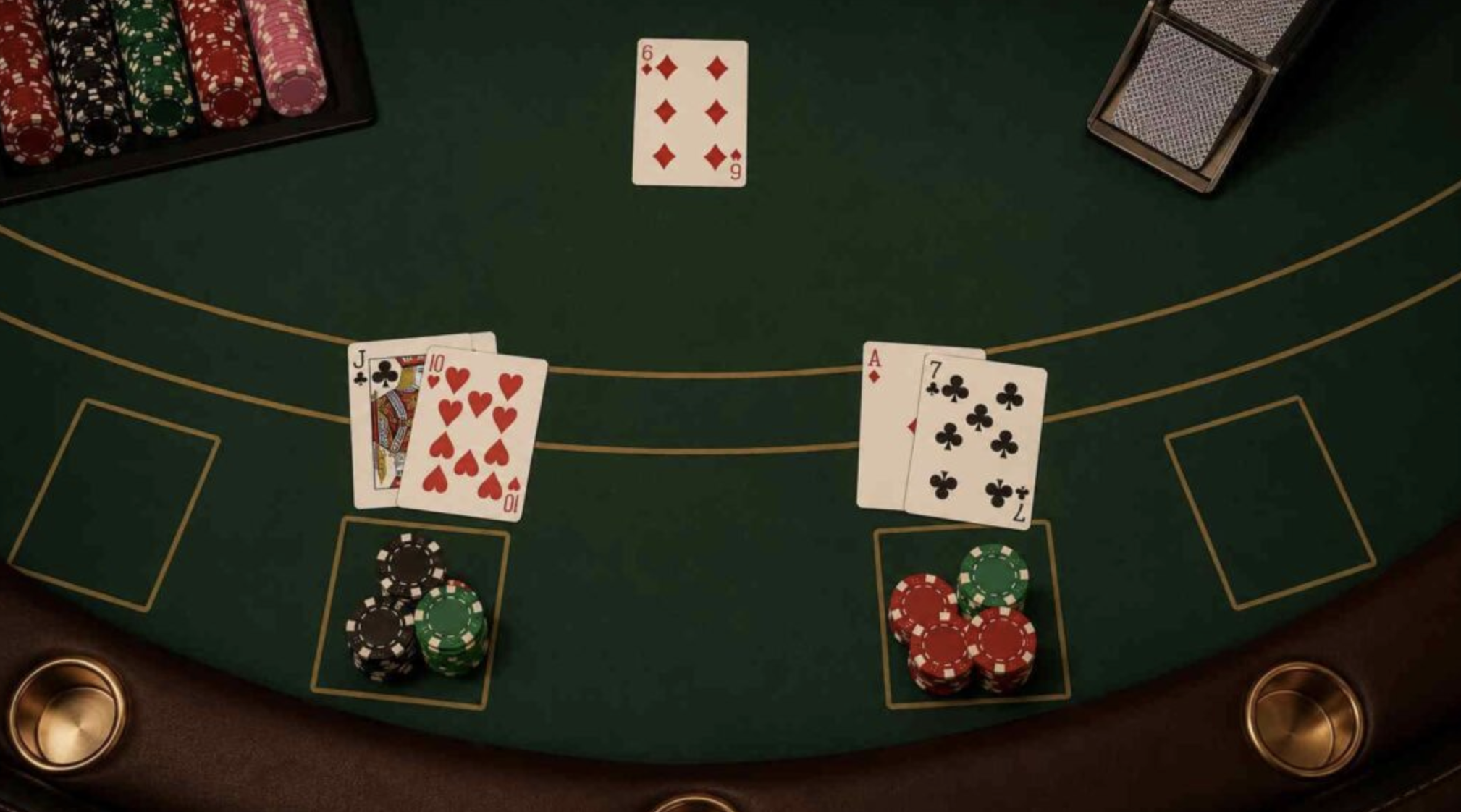
Blackjack: het casinospel voor de strategische speler
Blackjack is het casinospel waarin je vaardigheid het meest tot uiting komt en waarin je tegen het huis speelt in plaats van tegen andere spelers. Het huis heeft nog steeds een voordeel, maar de omvang daarvan hangt in belangrijke mate af van hoe je speelt.
Een speler die de basisstrategie gebruikt — een wiskundig optimale reeks beslissingen voor elke mogelijke hand — vermindert het huisvoordeel tot ongeveer 0,5% bij standaard blackjack. Zonder strategie krijgt de gemiddelde speler te maken met een huisvoordeel van 2–3%. Dat is een enorm verschil, en het ligt volledig binnen de controle van de speler om dit verschil te verkleinen.
De basisstrategie bij blackjack is niet ingewikkeld — het is een raster van beslissingen (hit, stand, double down, split) op basis van je handtotaal en de zichtbare kaart van de dealer. Je kunt het in een paar uur leren en na een paar oefensessies uit je hoofd leren. Voor een gamer die gewend is aan het onthouden van sneltoetsen, bouwvolgordes of item-builds, is het leren van de basisstrategie bij blackjack een fluitje van een cent.
Naast de basisstrategie kan het tellen van kaarten – het bijhouden van de verhouding tussen hoge en lage kaarten die nog in het kaartspel zitten – het voordeel van de speler naar positief gebied duwen. Dit is legaal, maar wordt sterk afgeraden door casino’s, die kaartentellers zullen vragen te vertrekken. Het vereist aanzienlijke mentale inspanning en oefening, maar het is een fascinerende oefening in de toepassing van probabilistische tracking in een realtime beslissingsomgeving.
Videopoker: het snijpunt van gokautomaten en vaardigheid
Videopoker is een ondergewaardeerd juweeltje voor spelers, omdat het eruitziet als een gokautomaat maar gespeeld wordt als een behendigheidsspel. Je krijgt vijf kaarten gedeeld, je kiest welke je wilt behouden en welke je wilt weggooien, en je ontvangt nieuwe kaarten op de plaatsen waar je kaarten hebt weggegooid. Je uitbetaling hangt af van de uiteindelijke hand.
Het vaardigheidselement is reëel: voor elke mogelijke starthand is er een wiskundig correcte beslissing, afhankelijk van de uitbetalingstabel. Spelers die de optimale strategie gebruiken op een full-pay Jacks or Better-machine kunnen het huisvoordeel terugbrengen tot minder dan 0,5% — vergelijkbaar met de beste blackjack-voorwaarden.
Videopoker is snel, solitair en sterk te optimaliseren — eigenschappen die aanslaan bij een bepaald type gamer die ervan geniet om optimale oplossingen te vinden en uit te voeren. Het biedt ook aanzienlijk meer waar voor je geld dan standaard gokautomaten, die een huisvoordeel van 3–10% hebben zonder enig vaardigheidselement.
Spellen die gamers beter kunnen vermijden
Om eerlijk te zijn: niet alle casinospellen zijn vanuit het oogpunt van vaardigheid gelijk.
Standaard gokautomaten draaien puur op kans. Je hoeft geen andere beslissingen te nemen dan hoeveel je inzet en op welke automaat je speelt. Het theoretische uitbetalingspercentage (RTP) ligt vast in de software en kan door geen enkele strategie worden beïnvloed. Voor gamers die graag zelf de touwtjes in handen hebben en beslissingen nemen, zijn gokautomaten de minst interessante vorm van casinospelen.
Roulette is eveneens puur geluk. Het huisvoordeel op een Europees (single-zero) roulettewiel is een vaste 2,7% op bijna elk type inzet, ongeacht je strategie. De verschillende inzet systemen die je tegen kunt komen — Martingale, Fibonacci — zijn wiskundig failliet en veranderen het verwachte rendement niet. Roulette is een fijne sociale ervaring als je van de sfeer geniet, maar het beloont strategisch denken niet.
Baccarat zit er ergens tussenin: er zijn slechts een klein aantal beschikbare inzetten en er hoeven tijdens het spel bijna geen beslissingen te worden genomen. Het is een spel met een laag huisvoordeel (de bankinzet ligt rond de 1,06%), maar er is in wezen geen ruimte voor het tonen van vaardigheid.
Verantwoord omgaan met de kruisbestuiving
De crossover tussen gaming en gokken is niet zonder risico’s, en het is de moeite waard om deze rechtstreeks aan te pakken. De vaardigheden die positief worden overgedragen — analytisch denken, probabilistisch redeneren, patroonherkenning — zijn reëel. Maar gaming ontwikkelt ook gewoontes die in een gokcontext contraproductief kunnen zijn: de wens om na een verlies door te spelen om “het gelijk te trekken”, het sunk cost-denken dat verhindert om weg te lopen van een slechte sessie, en de competitiedrang die ervoor zorgt dat verliezen persoonlijk aanvoelt.
Behandel je casinosessies zoals je een competitieve gamesessie zou behandelen: bepaal een sessiebudget voordat je begint (je ‘levens’), speel de op vaardigheden gebaseerde spellen waarbij je besluitvorming ertoe doet, en stop wanneer de sessie voorbij is, ongeacht of je winst of verlies hebt. Variatie is reëel in beide contexten, en de beste spelers in beide domeinen hebben hun gevoel van eigenwaarde losgekoppeld van kortetermijnresultaten.
De kruisbestuiving tussen gamen en gokken is reëel, intellectueel interessant en maakt – mits correct benaderd – bepaalde casinospellen echt de moeite waard. Vooral poker beloont precies de vaardigheden die competitief gamen ontwikkelt. Maar het huis wint op de lange termijn in de meeste formats, en de juiste mindset bij gamen is om de kleinste voordelen te vinden, die goed uit te spelen en de variantie te beschouwen als onderdeel van de ervaring in plaats van iets om tegen te vechten.
Speel de spellen die je vaardigheden belonen. Vermijd de spellen die dat niet doen. En weet wanneer de sessie voorbij is.